Last checked: 16 November 2026. This page is general legal information, not legal advice. CBD rules in the UK are under active review, so check the linked official sources before you rely on any detail.
Is CBD legal in the UK? The short answer
CBD (cannabidiol) on its own, in its pure form, is not a controlled drug in the UK 1,5. That does not mean every CBD product is automatically legal to sell or to buy. Three separate sets of rules apply, and a product has to satisfy all of them that are relevant to it:
- Drug law (Home Office). Cannabis and several other cannabinoids, including THC, are controlled drugs. A CBD product that contains them is only outside drug controls if it meets the strict “exempt product” definition 1,2.
- Food law (FSA and Food Standards Scotland). CBD in food, drinks, oils and drops taken by mouth is a “novel food”. It must be authorised before it can be legally sold, and no CBD food product has been authorised yet 4,5,7.
- Medicines law (MHRA). A CBD product that is marketed with medical claims is treated as a medicine and needs a marketing authorisation (a product licence) 3,11.
The rest of this guide explains each of these, in plain terms, with links to the official guidance.
Controlled drugs: THC and the “exempt product” rules
Cannabis is a Class B drug under the Misuse of Drugs Act 1971. Some of the cannabinoids found in the plant are also controlled in their own right as Class B drugs, including THC (tetrahydrocannabinol) and THC-V 1. CBD itself is not on that list: the Home Office states that “Pure CBD, as an isolated substance, is not controlled” under the Act 1. The FSA describes it in the same way: “CBD is not controlled as a drug but is classed as a novel food” 5.
The complication is that pure CBD is hard to achieve in practice. The Home Office says it is “nearly impossible” to extract CBD from the cannabis plant, or make it synthetically, without traces of controlled cannabinoids such as THC, so it is “highly likely” that CBD products will contain them 1. The MHRA also reminds companies that products “may contain residual levels of THC which is a controlled substance” 3.
A product that contains a controlled cannabinoid is only free of the usual drug-law prohibitions if it meets the “exempt product” definition in regulation 2 of the Misuse of Drugs Regulations 2001. All three conditions must be met 1,2:
- the product is not designed for administration of the controlled drug to a human being or animal;
- the controlled drug cannot be recovered by readily applicable means, or in a yield that is a risk to health; and
- no one component part of the product contains more than one milligram of the controlled drug.
The Home Office also says the 1 mg threshold applies to the whole container, such as a bottle of oil, not to a typical dose 1.
The Home Office says whether a product meets this definition is “a matter of fact, determined on a case-by-case basis” 1. You will sometimes see claims that a fixed percentage of THC (for example “0.2%”) makes a product legal in the UK. That is not how the exempt product definition is written: it refers to the three conditions above, not a percentage 1,2.
CBD foods and novel food authorisation
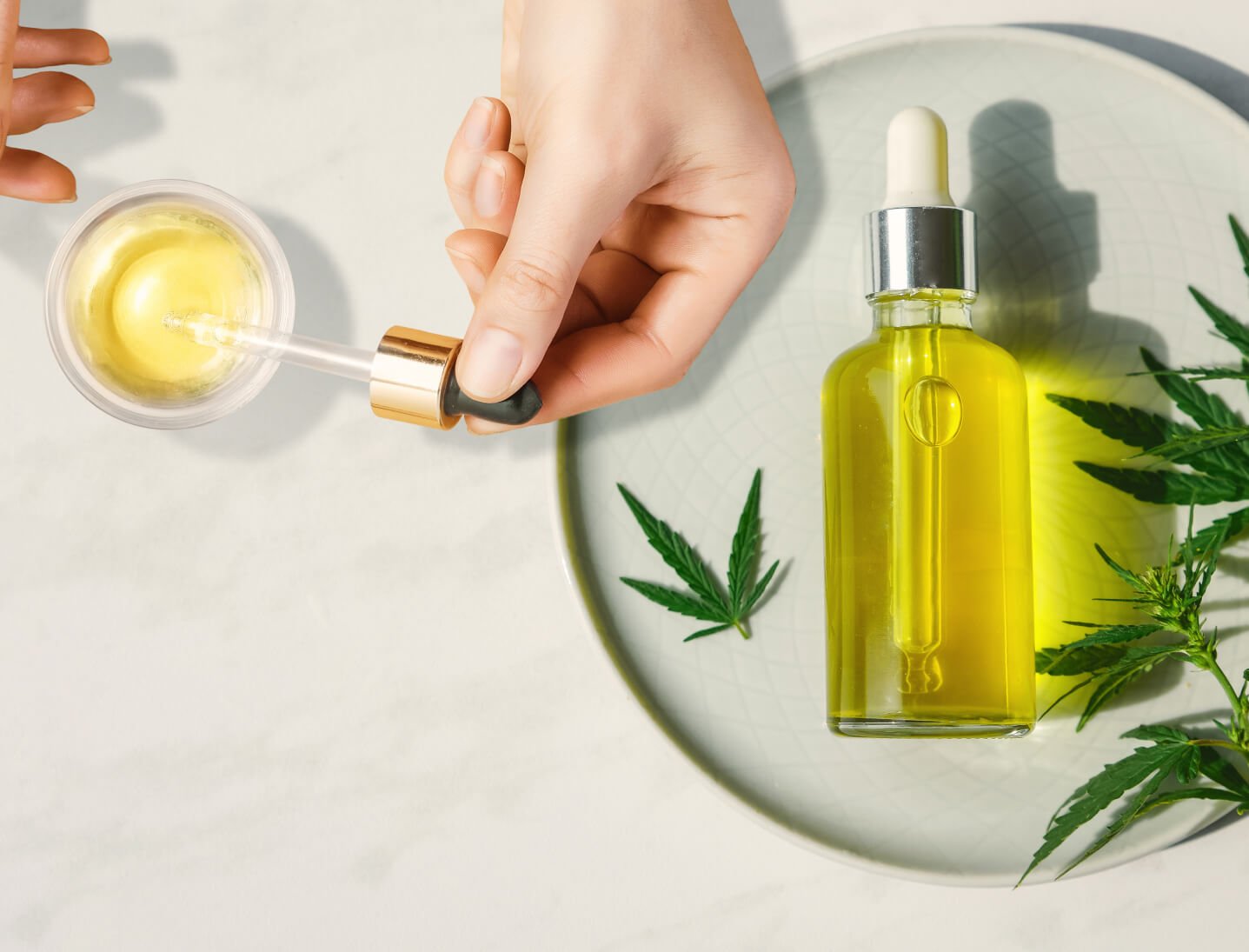
The FSA confirmed the novel food status of CBD in January 2019 3,4. In food law, a novel food is one without a significant history of consumption before May 1997. It needs a safety assessment and authorisation before it can be sold 4,7. This covers CBD oils, drops and tinctures taken by mouth, as well as gummies, drinks and other edibles 4,6.
The key points, as the regulators state them:
- No CBD food product is currently authorised in the UK 5,7. The ASA adds that sellers should not state or imply that a CBD food has been approved or authorised by the FSA when it has not 11. In Scotland, Food Standards Scotland says that “no CBD products are currently authorised” 7.
- The FSA public list. In England and Wales, some products are tolerated on the market while their authorisation applications are assessed. To be on the list, a product had to be on sale on 13 February 2020 and linked to an application received by 31 March 2021 4. Being on the list does not mean a product is authorised, and it is not an FSA endorsement 5,6.
- Products not on the list. The FSA says no new CBD extracts, isolates or final products should be put on the market until they are authorised. It expects products not on the list to be withdrawn, and local authorities can remove them 4.
- Hemp seed and hemp seed oil are not novel foods, because they have a history of consumption 4.
England, Wales, Scotland and Northern Ireland
The FSA public list applies to England and Wales. Novel food rules in Scotland are handled by Food Standards Scotland 4,7. In Northern Ireland, CBD food products need authorisation under EU law, and the FSA says there are currently no authorised CBD food products on the Northern Ireland market 4.
What is changing
The FSA has been assessing the first applications for high-purity (at least 98%) CBD as a food ingredient before advising ministers 5,8. Its board paper, updated 19 October 2026, recommends that ministers in England and Wales consider authorising the first three applications, with conditions designed to protect consumers 8. The final decision rests with ministers. Until an authorisation is actually granted, the FSA’s position is still that no CBD food is authorised 5,8. We will update this page when that changes.
Who UK food regulators say should not use CBD
Both the FSA and Food Standards Scotland advise that CBD is not recommended for certain groups unless under medical direction: under-18s, people taking any medication, and people who are pregnant, breastfeeding or trying to conceive 4,6,7. The FSA also publishes precautionary consumption advice for healthy adults; read it on the FSA’s own consumer advice page rather than relying on figures repeated on product packs or shop websites. This guide does not give dose advice.
If you take medication or have a health condition, speak to your GP or pharmacist before using any CBD product. Our CBD safety & side effects topic covers what is known in more detail.
Medicinal claims and MHRA licensing
The MHRA’s position is that “products containing cannabidiol (CBD) used for medical purposes are medicines”. A CBD product marketed with a medicinal claim falls within the Human Medicines Regulations 2012 and must hold a marketing authorisation before it can be legally sold, supplied or advertised (unless exempt) 3. The ASA and CAP add that if a CBD product is not a licensed medicine, its ads should not make medicinal claims. They say words such as “cure”, “restore”, “prevent”, “fight” or “heal” are likely to be seen as medicinal 11.
In practice, this means a CBD shop product that says it treats a condition is either making an unlawful claim or would need to be a licensed medicine. The FSA also notes that CBD food products “are not medicines and there are no authorised health claims for CBD food products” 5.
Topicals and cosmetics
Creams, balms and other products applied to the skin are not foods, so the novel food rules above are aimed at products you eat or drink 4,6. The drug-law rules still apply whatever the format: the Home Office says the exempt product definition “may apply to preparations or products in any form” 1. The medicines rules also apply if a topical is marketed with medical claims 3,11.
Prescription cannabis-based medicines are a separate route
Shop-bought CBD and prescribed cannabis-based medicines are regulated in completely different ways. Specialist doctors can prescribe certain cannabis-based products for medicinal use 1,9. The NHS says very few people are likely to get an NHS prescription. Epidyolex, a highly purified CBD medicine, can be prescribed by a specialist for two rare forms of epilepsy, Lennox-Gastaut syndrome and Dravet syndrome 9,10.
The NHS warns that many cannabis-based products sold online are of unknown quality and content, “may be illegal in the UK and potentially dangerous” 9. The Home Office notes they are likely to contain controlled cannabinoids 1.
THC, CBD and driving
It is illegal in the UK to drive if you are unfit to do so because of drugs, or if you have certain drugs in your blood above a specified limit 12. In England and Wales, the limit for THC (delta-9-tetrahydrocannabinol) is set in regulations at 2 micrograms per litre of blood 12,13. Because the Home Office says CBD products are highly likely to contain traces of THC 1, and the FSA says CBD can cause drowsiness 5, do not drive if you feel drowsy or impaired after using any CBD product.
Quick checklist before you buy CBD in the UK
- Food, oil or drops? In England and Wales, check whether the product is on the FSA public list. The list only means the product is tolerated while it is assessed, not that it is authorised or safe 4,6.
- Medical claims? Treat any claim that a non-prescription CBD product treats or cures a condition as a red flag 3,11.
- THC content. Look for an independent certificate of analysis that reports THC and other controlled cannabinoids. Remember that a percentage alone does not show a product meets the exempt product definition 1,2. See CBD labels & quality.
- Health conditions or medication. Speak to your GP or pharmacist first 4,6.
Frequently asked questions
Is CBD oil legal in the UK?
Pure CBD is not a controlled drug 1,5. CBD oil taken by mouth is regulated as a novel food, and no CBD food product has been authorised yet. In England and Wales, products on the FSA public list are tolerated while their applications are assessed 4,5.
Is THC legal in the UK?
No. THC is a Class B controlled drug. A product containing it is only outside the prohibitions if it meets all three parts of the exempt product definition 1,2.
Can CBD shops make health claims?
No. A CBD product marketed with medicinal claims is regulated as a medicine and needs a marketing authorisation 3. The ASA and CAP say ads for unlicensed CBD products should not make medicinal claims 11.
Is CBD on prescription the same as CBD from a shop?
No. Prescribed cannabis-based medicines such as Epidyolex are licensed or specially supplied medicines, prescribed by a specialist for specific conditions. Shop CBD is not 3,9,10.
What’s changed
- 16 November 2026: page published. Checked against the Home Office drug licensing factsheet (updated 3 October 2024), the FSA business guidance (updated 28 August 2026) and the FSA board paper on the first CBD authorisations (updated 19 October 2026). Ministers had not announced a decision on those authorisations at the time of checking 1,4,8.
Sources
- Home Office. Drug licensing factsheet: cannabis, CBD and other cannabinoids. Updated 3 October 2024.
- The Misuse of Drugs Regulations 2001, regulation 2. legislation.gov.uk.
- MHRA. MHRA statement on products containing cannabidiol (CBD). GOV.UK.
- Food Standards Agency. Cannabidiol (CBD) guidance for England and Wales. Updated 28 August 2026.
- Food Standards Agency. Food Fact Check: CBD safety and health claims. 22 June 2026.
- Food Standards Agency. Cannabidiol (CBD): consumer advice.
- Food Standards Scotland. Know the facts: cannabidiol (CBD) products.
- Food Standards Agency. CBD novel food applications: recommendations to ministers on first authorisations. Updated 19 October 2026.
- NHS. Medical cannabis (and cannabis oils).
- NICE. Cannabis-based medicinal products (NG144).
- ASA/CAP. Cannabidiol (CBD) containing products: overview. 15 July 2025.
- GOV.UK. Drugs and driving: the law.
- The Drug Driving (Specified Limits) (England and Wales) Regulations 2014. legislation.gov.uk.
- ACNFP/COT. Provisional cannabidiol (CBD) acceptable daily intake: lay summary. GOV.UK.