Last checked: 17 November 2026. This page is general educational information, not medical advice. It does not recommend any product or amount.
What is CBD? The short answer
CBD is short for cannabidiol. It is one of many chemicals called cannabinoids that are found in hemp and cannabis plants, and it can also be made synthetically 1. Pure CBD, as an isolated substance, is not a controlled drug under the Misuse of Drugs Act 1971 2. It is not the same substance as THC (tetrahydrocannabinol), the cannabinoid that causes the “high” associated with cannabis 4.
In the UK, most CBD that people see in shops is sold as a food or food supplement, and those products are regulated as novel foods by the Food Standards Agency (FSA) 1. CBD products that make medical claims are regulated as medicines by the MHRA 3.
Where does CBD come from?
The FSA describes CBD extracts as substances that can be derived from most parts of hemp or cannabis plants. Extraction can concentrate the CBD, and some processes can alter other chemical components of the plant material 1. That is why two products both labelled “CBD” can contain different mixtures of other plant compounds.
The Home Office points out a practical consequence: because it is difficult to isolate CBD from the other cannabinoids, consumer CBD products can also contain varying amounts of controlled cannabinoids such as THC 2. Products that contain controlled drugs are themselves controlled, unless they meet the strict legal exemption explained in our guide to whether CBD is legal in the UK.
CBD vs THC: what is the difference?
| CBD (cannabidiol) | THC (tetrahydrocannabinol) | |
|---|---|---|
| What it is | A cannabinoid found in hemp and cannabis 1 | A cannabinoid found in cannabis 2 |
| UK drug law | Pure CBD is not controlled 2 | Class B controlled drug 2 |
| “High” | The NHS says CBD will not get you high 4 | The NHS describes THC as the chemical in cannabis that makes you high 4 |
| Sold as food in the UK | Only via the novel food route 1 | No; THC is a controlled drug 2 |
For more detail on intoxication, see Can CBD get you high?
What is CBD oil?
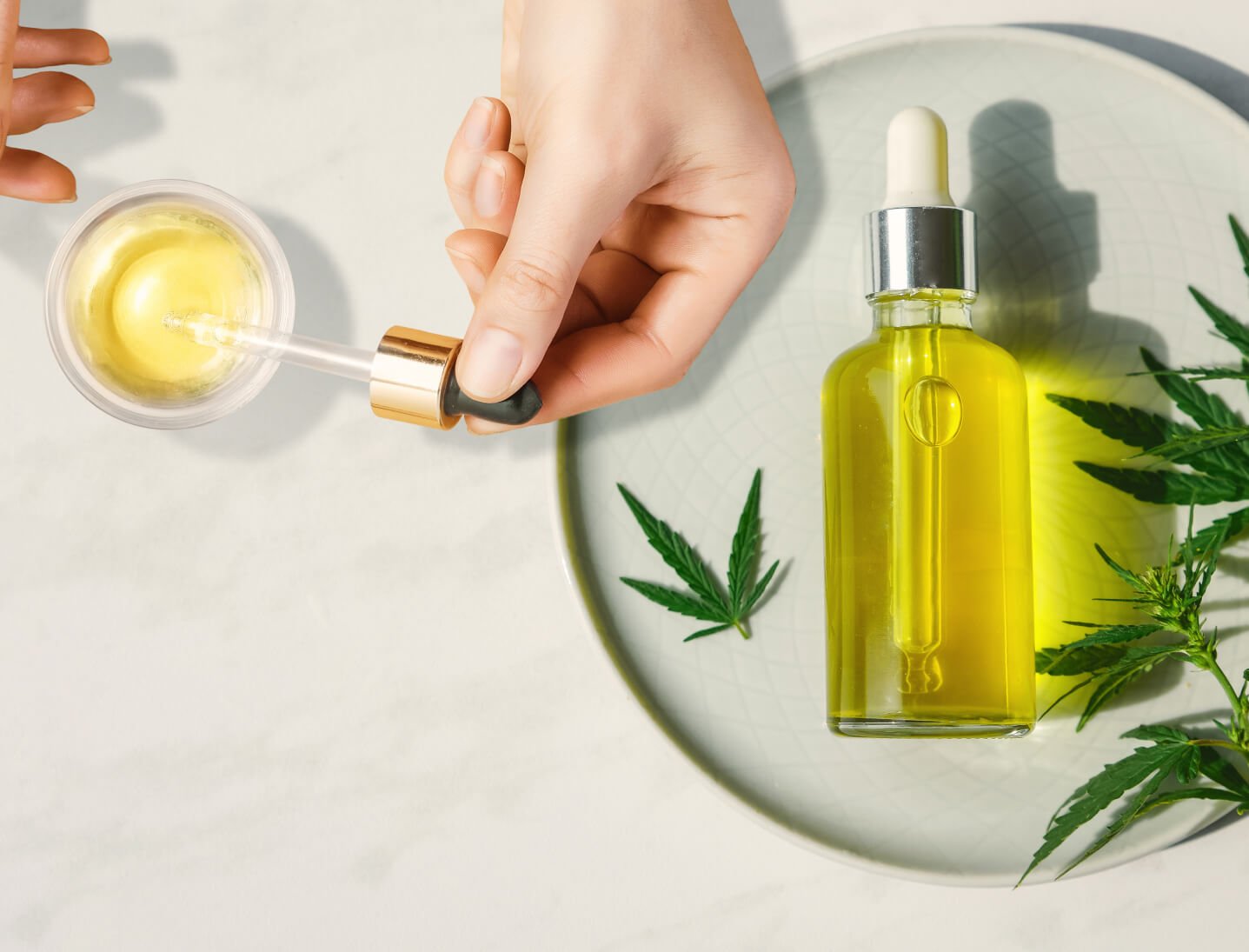
“CBD oil” usually means a CBD extract dissolved in a carrier oil and sold in a dropper bottle. The FSA lists oils, drops, tinctures and sprays alongside gel capsules, sweets, bakery products and drinks as forms in which CBD is sold as food in the UK 1. The NHS notes that CBD oils sold in health stores carry no guarantee of quality and tend to contain only small amounts of CBD 4.
Be careful with the name “hemp oil”. It can refer to oil pressed from hemp seeds, which is a different product from a CBD extract. Always read the label for the stated CBD content; our guide to reading CBD labels explains what to look for, and CBD oil vs capsules vs gummies compares the common formats.
How is CBD regulated in the UK?
Three separate regimes can apply to one product:
- Drug law (Home Office). Pure CBD is not controlled, but THC and some other cannabinoids are. A CBD product that contains controlled cannabinoids is controlled unless it meets the exempt product definition 2.
- Food law (FSA). CBD food products are novel foods and must be authorised before they are placed on the market. The FSA publishes a public list of products linked to applications that are moving through the process. Products on that list are not formally authorised, and the FSA says products not on the list should not be on the market in England and Wales 1. Scotland has its own regulator, Food Standards Scotland 6.
- Medicines law (MHRA). CBD products used for medical purposes are medicines. A product that makes a medicinal claim needs a marketing authorisation to be sold or advertised legally in the UK, unless exempt 3.
Is CBD a medicine?
Only in specific, licensed forms. Keep two things separate:
- Established (regulator position): the NHS states that Epidyolex, a highly purified liquid containing CBD, can be prescribed by a specialist for patients with Lennox-Gastaut syndrome and Dravet syndrome, two rare forms of epilepsy 4. NICE guideline NG144 sets out when cannabis-based medicinal products should be considered 5.
- Not established: CBD sold in shops as food is not a licensed medicine, and it is not allowed to be sold with medical claims 3. The NHS says there is no guarantee these products are of good quality or provide any health benefit 4.
Our research and evidence hub explains how we label evidence strength.
Who should be cautious with CBD?
As a precaution, the FSA does not recommend CBD products for people in vulnerable groups unless under medical direction: children under 18, people taking any medication, people trying to conceive, and people who are pregnant or breastfeeding 1. The FSA also says the more CBD a person consumes over their lifetime, the more likely long-term adverse effects such as liver damage or thyroid issues become, and it has issued precautionary intake advice for healthy adults 1. Read the FSA advice directly rather than relying on product marketing, and speak to a GP or pharmacist if you take any medicine (see CBD and medicine interactions). Our safety and side effects hub collects the official guidance.
Frequently asked questions
Is CBD a drug?
CBD is a chemical compound. In UK drug law, pure CBD is not a controlled drug, although products containing THC or other controlled cannabinoids can be controlled 2.
Is CBD the same as cannabis?
No. CBD is one of many cannabinoids found in cannabis and hemp plants 1. Cannabis itself is a Class B controlled drug in the UK 2.
Does CBD show up as THC?
CBD is a different substance from THC, but consumer CBD products can contain varying amounts of THC 2. Check the product’s certificate of analysis; see how to read a CBD COA.
Can I buy CBD legally in the UK?
CBD food products can be sold in England and Wales if they are linked to the FSA’s novel food process and comply with drug law 1,2. Our UK legality guide covers the detail.
Sources
- Food Standards Agency. Cannabidiol (CBD): consumer advice. GOV.UK. Checked 17 November 2026.
- Home Office. Drug licensing factsheet: cannabis, CBD and other cannabinoids. Updated 3 October 2024.
- MHRA. MHRA statement on products containing cannabidiol (CBD). 14 April 2025.
- NHS. Medical cannabis (and cannabis oils).
- NICE. Cannabis-based medicinal products (NG144).
- Food Standards Scotland. Know the facts: cannabidiol (CBD) products.